

Events15-07-2026
From Johannesburg: Five Signals on Where Agentic AI Meets Enterprise Banking
Read More →

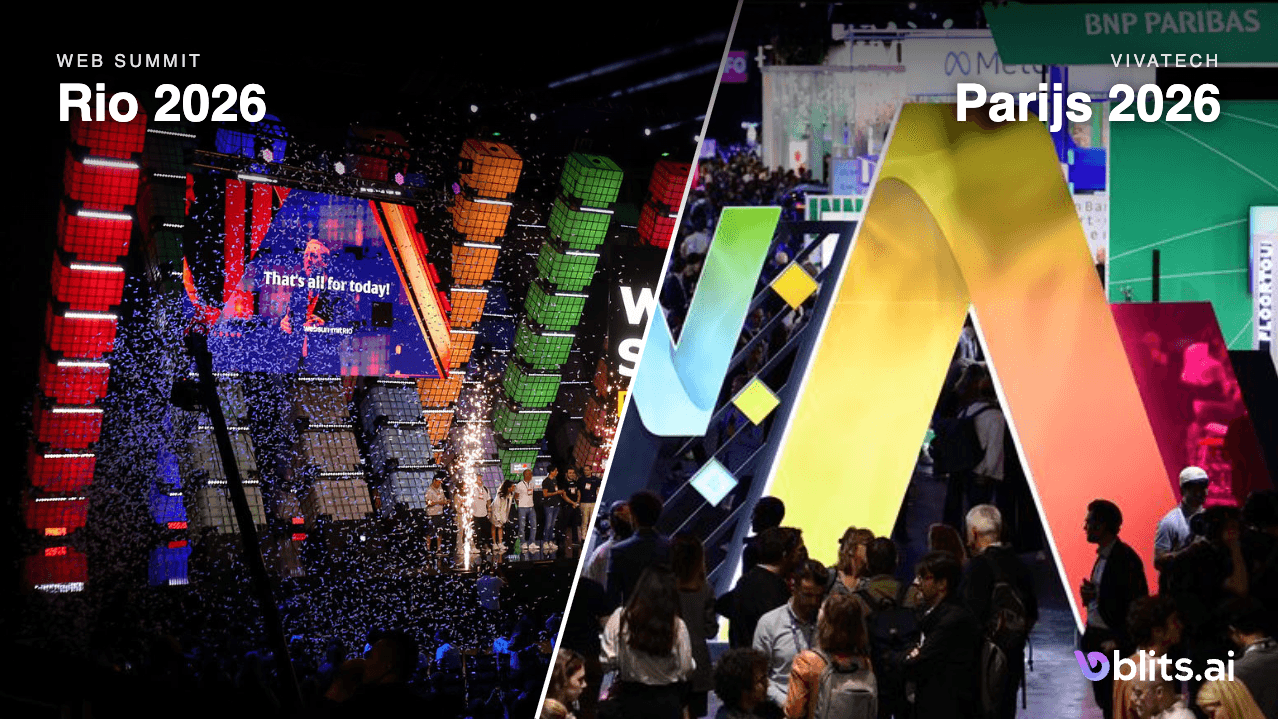
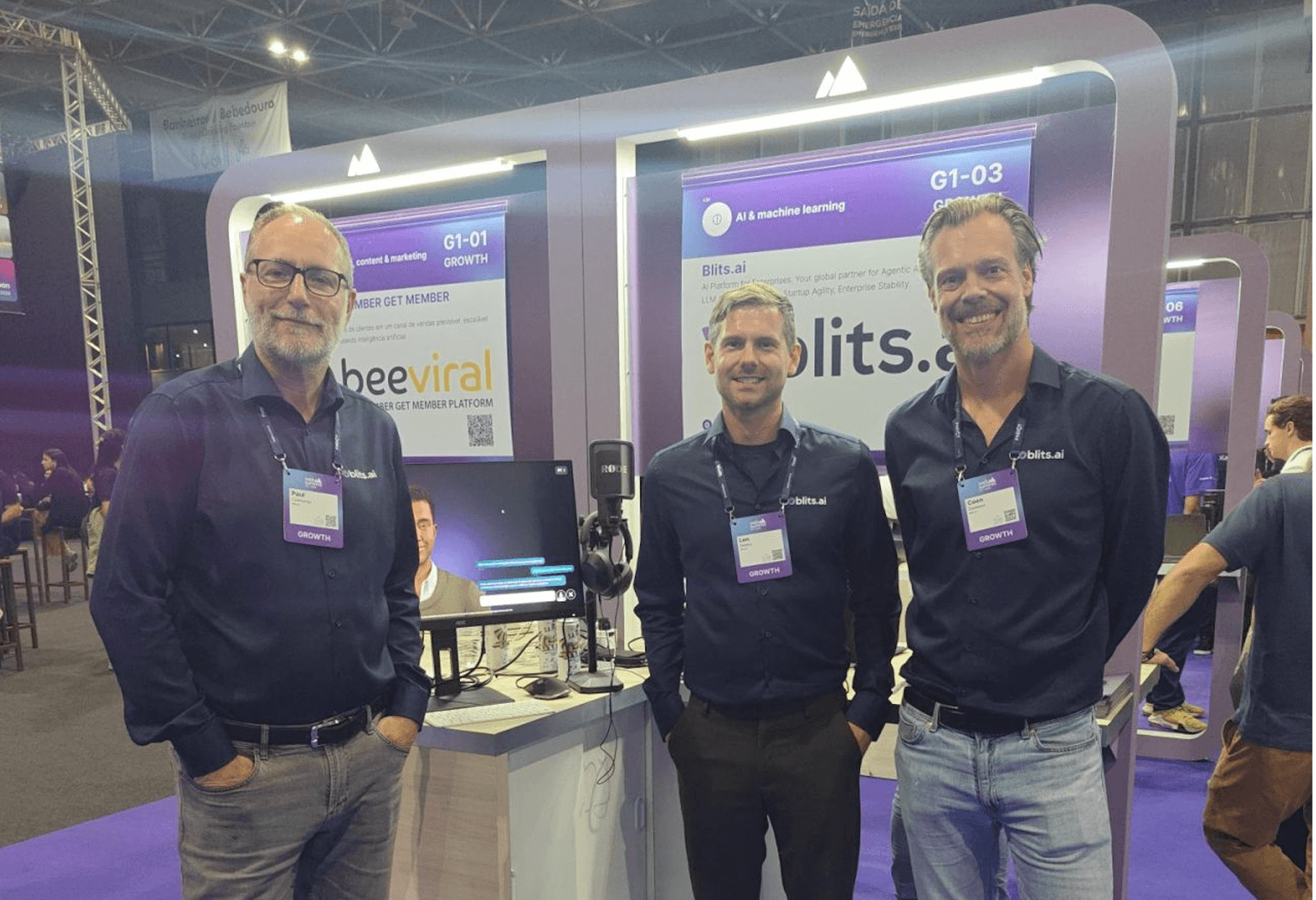
A few weeks before summer we took our AI and agentic solutions to two major technology events: VivaTech in Paris and Web Summit in Rio. After hundreds of conversations with enterprises, banks, insurers, retailers and industrial players, one thing stood out: the same themes kept coming back on both sides of the Atlantic.
We know how this can read coming from a vendor, and the idea is not to mark our own homework. So these are the questions enterprises raised, the topics that were discussed, and what we think they mean.
{image}
Most AI pilots never leave the lab. That was the loudest sentiment at both events, from CDOs, CIOs and heads of innovation tired of proofs of concept that impress in a demo and then stall on the way to production. The MIT Media Lab NANDA initiative, in its "State of AI in Business 2025" study reported by Forbes, found that only around 5% of enterprise AI pilots reach production with measurable value. The rest spend the budget without ever going live.
The mood has shifted. Enterprises no longer want a science project. They want something live, stable and compliant, doing real work. Two things are driving it: AI has become a business case the CFO cares about, and people have run out of patience with the gap between a good demo and a system that works day to day. For us this is familiar ground. Getting a focused use case into production in weeks rather than quarters, on a platform where security, governance and compliance are built in from the start, is the point.
The real question in 2026 is not what AI can do, but what is actually running.
Our digital humans drew a crowd at both stands, as they always do. But almost every serious conversation quickly moved past the avatar itself. Most people agreed with a point we have made for a while: the visible interface is only one layer, and the easiest part to copy. What determines whether it works is everything behind it. The conversational AI that understands context, the integrations into the CRM, ERP, data and workflows that already run the business, and the compliance layer that lets it be trusted with a real customer in a regulated market.
Get the interface right but the layer underneath wrong, and you have a demo. Get both right, and you have something that delivers real business impact. That was one of the clearest points of agreement in Paris and Rio.
For the past year the market has framed this as a choice: agentic AI or conversational AI. In our experience it is not a choice at all. We think of it as process plus experience. Agentic workflows handle the process, working across systems and unstructured data and turning scattered information into insight, decisions and action. Conversational AI is the experience: how a customer or employee interacts with that capability, in plain language, on whatever channel they use.
Lean too far either way and it shows.
Automate the process with no experience layer and you get a faster black box no one trusts. Put a polished conversation on top of a broken process and you have only made the waiting nicer.
Get the balance right and AI improves the workflow and the experience together, rather than just speeding things up.
The clearest way to explain this is with work we have already delivered. In banking in the Middle East, we built capabilities that sit on both sides at once. On the process side, a loyalty and personalised discount assistant that reads each customer's context, and financial health features that turn spending into guidance they can act on. On the experience side, digital humans in branch kiosks that do not just answer questions but help people get things done. The result is service that feels personal rather than transactional, which tends to mean more loyal customers and more relevant business opportunities for the banks themselves.
In heavier, industrial settings the focus shifts to operations, with agentic workflows that make sense of dense, unstructured engineering information and take manual load off expert teams. The common thread across sectors is that the technology itself is becoming a commodity. What decides whether a project succeeds is knowing which use case to build and how to design it for a specific organisation, which is as much a people question as a platform one.
At VivaTech in particular, the conversation kept returning to control: how do you run AI inside your own environment, isolated where it needs to be, in a way that respects sovereignty and data control? The sharpest version went beyond isolation. One enterprise architect put it in a way that matches how we think: agents that touch personal data run on models you control yourself, while the rest can use the strongest commercial model available, all within your own environment. Compliance teams no longer have to accept a weaker model everywhere just to stay safe.
There is a related concern we heard a lot. No one wants to build a solution around a single model when today's best choice may not be next quarter's, and switching should never mean starting over. What lasts is not the model but the framework you build around it. It is one reason we built our platform to be model agnostic, so changing the underlying model does not mean rebuilding everything around it. Or, as we tend to put it:
The frontier resets every quarter. Models are rented. Your operating framework is what you own.
Control is about more than where data sits and which model runs. The question that increasingly decides a deal is governance. Once agents start touching customer interactions, financial processes and core systems, buyers want to know exactly what an agent can do on its own, what needs human sign off, who is accountable when something goes wrong, and whether every action is logged. In 2026 that has become a decisive factor in enterprise procurement, which is why we treat approvals, audit trails and human oversight as part of the foundation, not an afterthought.
Put the signals together and they point one way. Enterprises are past wanting a platform to experiment on. They want their AI strategy executed: built for their use case, running in their environment, and used by their people and customers. Two things make that possible, and both are easy to underestimate. People who can turn ambition into the right use case and design it well, because knowing how to apply the technology now matters more than the technology itself. And a platform that gets it live quickly and keeps it compliant, stable and secure as it scales.
Our thanks to everyone who shared their thinking so openly in Paris and Rio. The ambitions are high, and GenAI is starting to deliver real business impact. If any of this resonates, we would be glad to compare notes. Preferably over coffee.
Get the latest insights on conversational AI, enterprise automation, and customer experience delivered to your inbox
No spam, unsubscribe at any time